RiderShield
Automatic income protection for gig delivery riders
One rainy evening or app outage can wipe out a delivery rider's daily income.
A pricing and payout design for weekly parametric cover, plus a six-screen Next.js prototype.
A complete rider and admin journey, from quote to automatic payout, ready to connect to live data.
- Role
- Product design and front-end prototype
- Year
- 2026
- Stack
- Next.js, TypeScript, Tailwind CSS, Recharts, Framer Motion
Overview
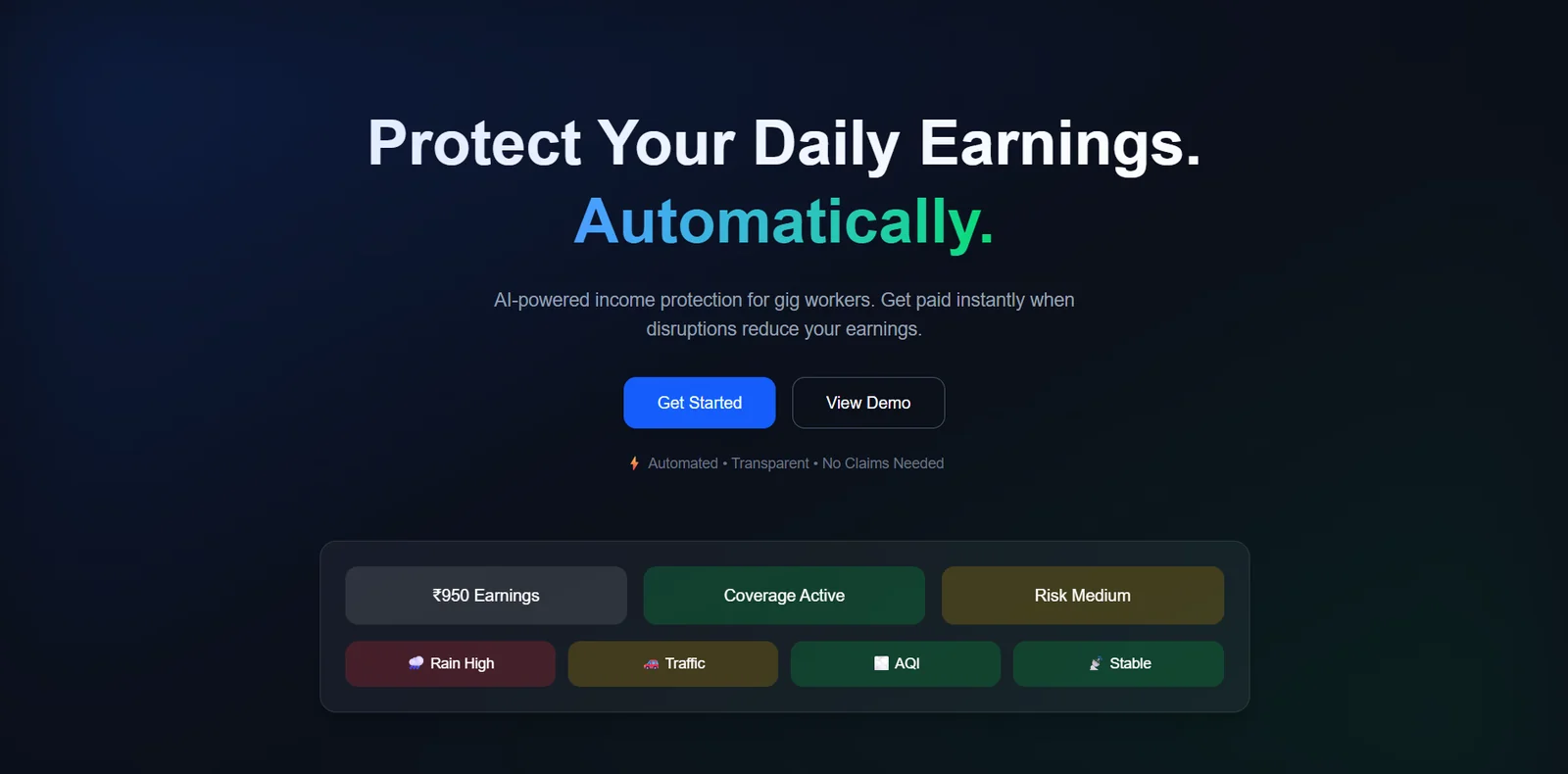
Parametric income protection for food-delivery and quick-commerce riders: when rain, gridlock, hazardous air or a platform outage cuts their earnings, they are paid automatically, with no claim to file.
The problem
A delivery rider's income depends on completed orders. A heavy-rain evening or an app outage wipes out a day's earnings, and there is no safety net that pays fast enough to matter.
What I built
- 1Designed around two personas: a full-time food rider earning ₹900 to ₹1,200 a day and a part-time quick-commerce partner working evening shifts.
- 2Specified a weekly pricing model: expected loss from rain, traffic, air quality, civic and connectivity risk in the rider's 2 km zone, times a coverage ratio, plus a risk margin.
- 3Specified payouts that need two triggers to agree: a hazard over its threshold (for example rain above 20 mm/hr for 30 minutes) and a measured drop in the rider's income, plus fraud checks.
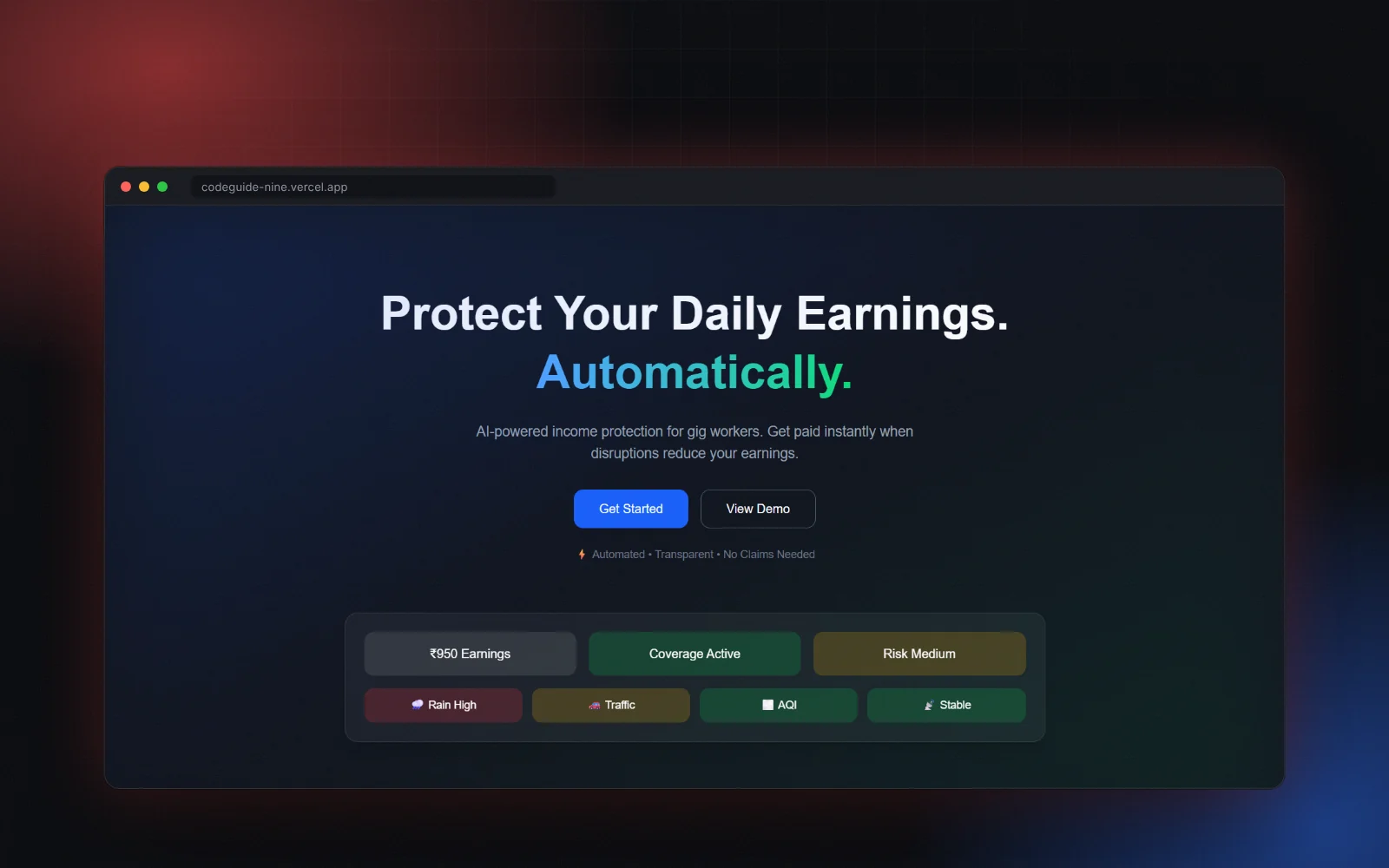
- 4Built a clickable Next.js prototype of the product: landing page, rider dashboard, weekly quote, coverage activation, payout history and an admin analytics view.
Highlights
- Claim-free by design: riders never fill in a form.
- Six prototype screens covering the full rider and admin journey.
How it works
- Weather, traffic, AQI, civic signals
- Hazard trigger
- Impact trigger: income vs baseline
- Fraud checks
- Automatic payout + audit trail
Key decisions and trade-offs
Two triggers, not one
A payout needs both a hazard over its threshold and a real drop in the rider's income, which limits false payouts.
Weekly pricing
Premiums are priced per week to match gig payout cycles and keep costs predictable.
Freeze the policy at activation
An immutable snapshot ensures payouts use exactly the parameters that were priced.
What I'd improve next
- Connect the prototype to live weather, traffic and AQI APIs and a payout backend.
- A mobile app for GPS geofencing, network diagnostics and push notifications.
Screens