Simulation
Solaris Digital Twin
Real-time digital twin of a self-landing rocket
Problem
Testing landing logic on real hardware is slow and risky.
What I built
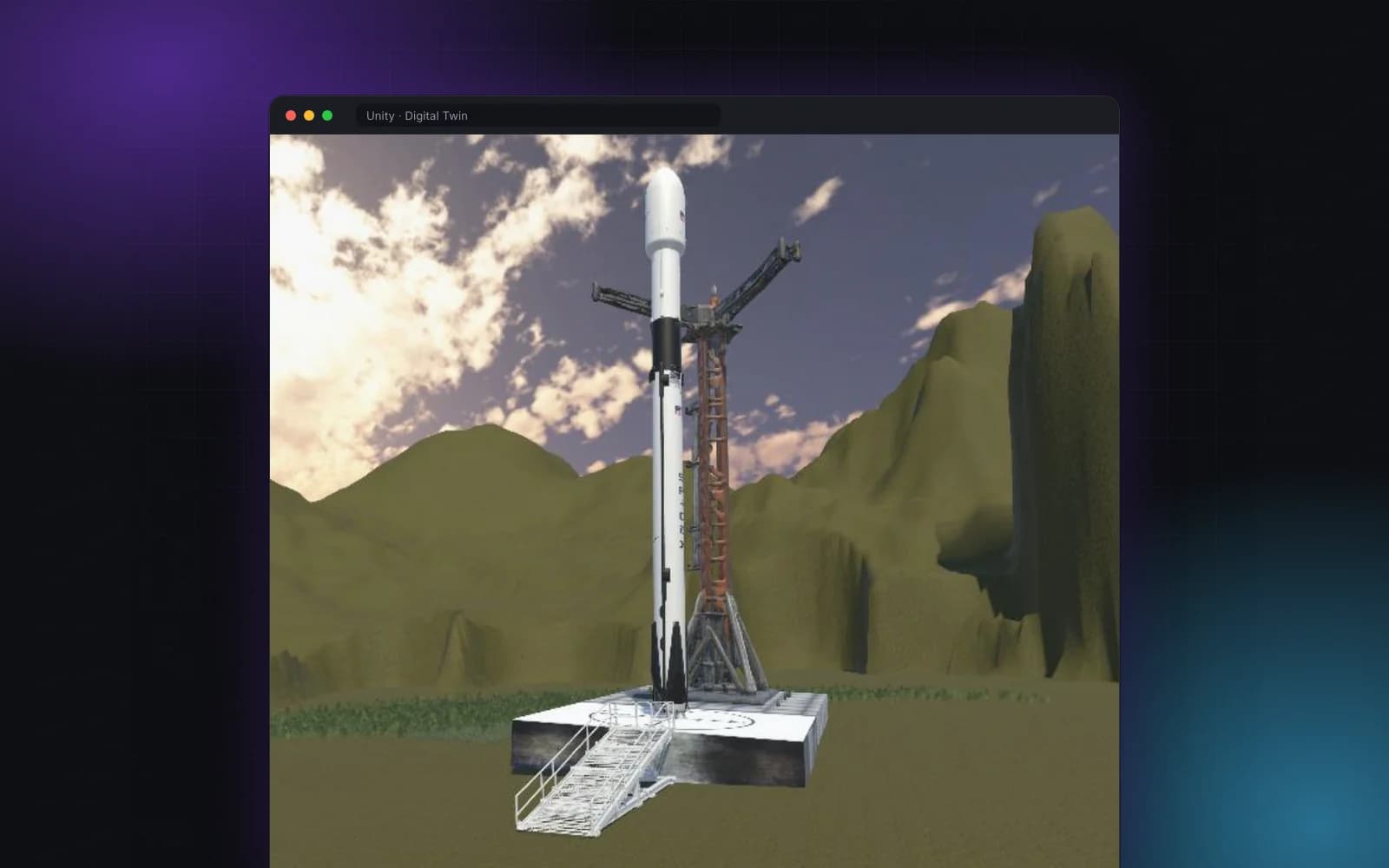
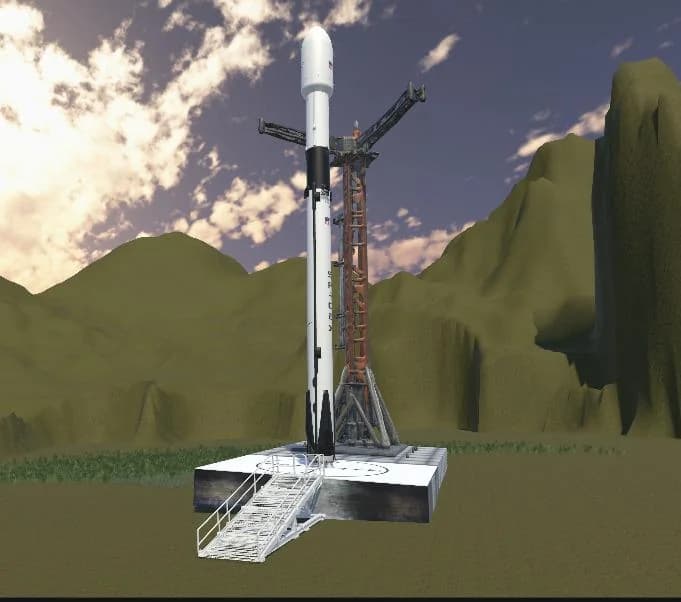
A Unity digital twin of a self-landing rocket driven by live Arduino sensor data.
Result
The same landing scenario runs in simulation and on the physical model.
- Role
- Project lead
- Year
- 2025
- Team
- SRM Institute of Technology
- Stack
- Unity, C#, Arduino, Python
Overview
A Unity simulation of a self-landing rocket that mirrors a physical model in real time, fed by live sensor telemetry from an Arduino.
The problem
Testing landing logic on physical hardware is slow and risky. A digital twin lets you run the same scenario in simulation and on the real model, and compare them.
What I built
- 1Built the rocket, launch pad and terrain in Unity and scripted the autonomous landing in C# on Unity's physics engine.
- 2Streamed ultrasonic-sensor readings from an Arduino over serial into the simulation.
- 3Kept the virtual and physical models in sync so telemetry could be read on either side.
Highlights
- Hardware-in-the-loop: real sensor data drives the simulation.
How it works
- Ultrasonic sensor
- Arduino
- Serial link
- Unity digital twin
- C# landing logic
Screens
Next project
DonorDash
Donation platform that matches donors with nearby charities